


 503-928-4584
Last Updated: November 24, 2026
Quick Summary
To start reflective journaling, follow a gentle first week: write one sentence on day one, list three moments on day two, and build up to reading the week back on day seven. Keep each session to five minutes, because consistency matters far more than length.
- Finish the line "Today I felt _ because _" as your first entry.
- Use a daily template that moves from emotion to event to insight to intention.
- Pick one prompt per session and accept a single honest sentence as complete.
- Write at the same time each day, attaching it to an existing habit.
- Once a week, skim seven entries and note repeating feelings and situations.
Table of Contents
- What Is Reflective Journaling and Why It Helps
- Your First Week: A Step-by-Step Plan to Start Daily Reflective Journaling
- A Repeatable Self-Reflection Journal Example Entry
- Reflective Journaling Prompts to Get Unstuck
- How to Start Daily Reflective Journaling PDF and Printable Resources
- Common Mistakes to Avoid and How to Stay Consistent
- Choosing a Journal That Supports Your Practice
- Your Next Step: Pick Up a Pen and Begin
- Frequently Asked Questions
What Is Reflective Journaling and Why It Helps
Reflective journaling is the practice of writing down your thoughts, feelings, and daily experiences to understand them better over time. Unlike a simple diary, it asks you to look at what happened and why it mattered. This guide walks you through how to start daily reflective journaling, even if you have never kept a journal before.
The core idea is simple. You write for a few minutes, then you pause and ask what the day taught you.
That small habit builds self-awareness. Research on expressive writing from the American Psychological Association suggests that putting feelings into words can support emotional processing.
Journaling does not have to be a performance. It can be a quiet conversation with yourself.
Your First Week: A Step-by-Step Plan to Start Daily Reflective Journaling
The fastest way to learn how to start daily reflective journaling is to follow a short, gentle plan. Below is a first week you can copy exactly.
- Day 1: Write one sentence. Finish this line: "Today I felt ___ because ___."
- Day 2: List three things. Name three moments from your day, good or hard.
- Day 3: Ask one question. Write "What do I need tomorrow?" then answer.
- Day 4: Name an emotion. Pick one feeling and describe where you noticed it in your body.
- Day 5: Note one success. Write down something small you handled well.
- Day 6: Reflect on a challenge. Describe one hard moment and what you would try next time.
- Day 7: Read it back. Skim the week and write one line about what you notice.
Keep each session to five minutes. That is it. Consistency matters far more than length.
Here is the first-week plan at a glance, with each session kept to five minutes.
| Day | What to do |
|---|---|
| Day 1 | Write one sentence: "Today I felt _ because _" |
| Day 2 | List three moments from your day, good or hard |
| Day 3 | Ask "What do I need tomorrow?" then answer |
| Day 4 | Name one emotion and where you felt it in your body |
| Day 5 | Note one small success you handled well |
| Day 6 | Describe one hard moment and what you would try next time |
| Day 7 | Skim the week and write one line about what you notice |
A Repeatable Self-Reflection Journal Example Entry
A self-reflection journal example makes the habit easier to repeat. Use this template as your daily entry format. Copy it into your journal and fill in the blanks.
Date: ___ Today I felt: ___ One thing that happened: ___ What I noticed about myself: ___ One small win: ___ Tomorrow I want to: ___
This structure works because it moves from emotion to event to insight to intention. It takes about five minutes and covers the basics of a daily check-in.
Vary it when you need to. Some days you will want to write more about feelings. Other days you will focus on goals or gratitude. The template is a starting point, not a rule.
Reflective Journaling Prompts to Get Unstuck
Reflective journaling prompts give your mind a place to land when the page feels blank. But the prompt itself is only half the tool. The other half is knowing which prompt to reach for and what to do when the answer surprises you.
A useful way to organize prompts is by the state you are in when you sit down.
When you are drained or foggy:
- What drained my energy today, and what restored it?
- What am I carrying that I could set down?
- Where did I show myself kindness today, even in a small way?
When you are restless or avoiding something:
- What did I avoid today, and what was I protecting?
- If I were not afraid of the answer, what would I write next?
- What is the smallest version of the thing I keep postponing?
When you are steady and want to go deeper:
- What is one lesson this week is teaching me?
- Where did my reaction today not match the size of the event?
- What would I want to remember about this season in a year?
When you have nothing to say:
- What did I notice with my senses today that I usually ignore?
- What is one sentence I would tell a friend about my day?
- What am I grateful for that I have stopped noticing?
Pick one prompt per session. Do not force a long answer. A single honest sentence is a complete entry.
Watch out: if a prompt brings up something heavy, a loss, a conflict, a memory you did not expect, write one honest line and stop there. You do not owe the page a full story, and pushing through distress to "finish the entry" turns a reflective practice into a re-traumatizing one. Close the journal, do something grounding, and return another day if you want to.
For a deeper set of prompts organized by need, you can explore 10 Journaling Prompts for Personal Healing That Work.
How to Start Daily Reflective Journaling PDF and Printable Resources
Printable resources remove the guesswork. A how to start daily reflective journaling PDF usually bundles prompts, a weekly tracker, and a simple entry template into one page you can print and keep near your journal.
Here is what to look for in a good printable set:
- A one-page entry template you can reuse
- A weekly habit tracker with small checkboxes
- A short list of reflection questions for hard days
- Space for a monthly review of patterns
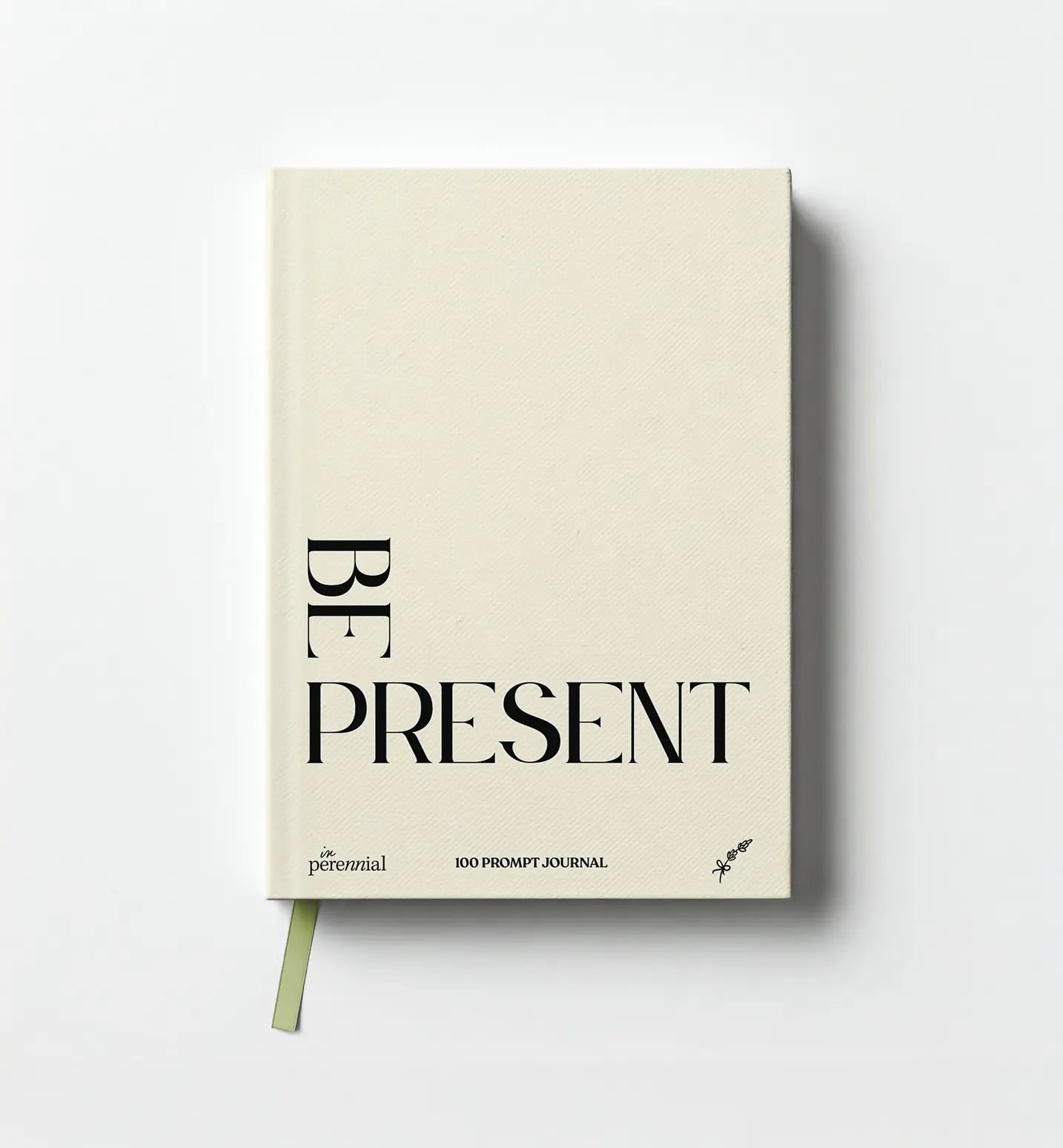
You can also pair printables with a guided journal. The Be Present 100 Guided Prompt Journal - Beige Edition offers 100 prompts across themes like emotional wellness and mindfulness, with undated pages you can start any day.
Common Mistakes to Avoid and How to Stay Consistent
Consistency beats intensity. Most people quit journaling because they expect too much from it. Watch out: treating a missed day as failure is the fastest way to stop entirely.
Here is how to stay steady:
- Write at the same time each day. Attach it to something you already do, like morning coffee or bedtime.
- Keep sessions short. Five minutes is enough on busy days.
- Skip the editing. Cross things out, write messy, move on.
- Lower the bar on hard days. One sentence still counts.
If you miss a day, just start again the next one. No catch-up entries needed. The habit survives on small, repeatable sessions, not on perfect attendance.
When you have nothing to write. This is not a sign the practice has stopped working. It usually means the day was ordinary, and ordinary days are where most self-awareness actually lives. Try one of these:
- Write the single most boring thing that happened, then one sentence about why it stuck with you.
- Describe your day from the perspective of someone watching you.
- Write one sentence you would want to read six months from now.
How to review entries and find patterns. Writing without revisiting is like taking notes you never read. Once a week, skim the last seven entries and answer three questions in the margin:
- What feeling showed up most often?
- What situation kept repeating?
- What did I say I would do that I have not done yet?
Once a month, read back four weeks of weekly notes and write one paragraph about what you notice. This is where journaling stops being a diary and starts being a feedback loop. The patterns you find can become raw material for change.
Building a routine that supports self-care makes the habit stick, and personal storytelling and self-care for daily routines can help you shape one that fits your life.
Choosing a Journal That Supports Your Practice
The right journal makes the habit feel easier. Look for a size you can carry, paper that does not bleed, and a format that matches how you like to write.
- Guided prompts: best if you freeze at a blank page.
- Lined pages: best for free writing and daily entries.
- Undated pages: best if you skip days and do not want gaps staring back at you.
A5 journals fit in most bags and feel comfortable to hold. If you want to compare formats before choosing, our aesthetic journals for daily reflection list breaks down the options.
Your Next Step: Pick Up a Pen and Begin
Starting is the whole point. You do not need the perfect notebook or a long stretch of quiet time. You need five minutes and one honest sentence.
At Brandy Journey, we make tools for exactly this kind of quiet moment. Our journals feature undated pages so you can start any day, a ribbon marker to hold your place, and 100gsm inner pages. The Beautiful Thoughts Daily Journal gives you 200 lined pages with no rules and no pressure, just space for your thoughts.
Get started with Brandy Journey and give yourself one small, steady place to reflect each day.
The hardest part of reflective journaling is not the writing. It is giving yourself permission to keep it small. Pick one journal, set it where you will see it, and write a single line tonight. That is a real beginning, and it is enough.
Frequently Asked Questions
What are the 5 R's of reflective writing?
The 5 R's are a framework for structuring reflective journaling: Reporting what happened, Responding with your feelings and observations, Relating the experience to past knowledge or other situations, Reasoning to explain why things unfolded as they did, and Reconstructing to plan what you would do differently next time. Using the 5 R's turns a simple diary entry into a deeper reflection that builds self-awareness. You do not need to answer every R each day; pick two or three that fit the moment.
How long should I spend reflective journaling each day?
Five to ten minutes is enough to build the habit. The key is consistency, not duration. Set a timer for five minutes and write without editing. If you have more to say, keep going; if not, stop when the timer ends. Over time, you may find yourself naturally writing for fifteen or twenty minutes, but starting small removes the pressure and makes daily reflective journaling easier to sustain.
What if I miss a day or have nothing to write?
Missing a day is normal and does not break your practice. Simply pick up the journal the next day without guilt. If you feel stuck, try a single reflective journaling prompt such as 'What is one thing I noticed today?' or 'How am I feeling right now, in one word?' You can also write about the fact that you have nothing to say; that itself is a reflection. The goal is to show up, not to produce perfect prose.
Can I use a guided journal instead of a blank notebook?
Yes. A guided journal like the Be Present 100 Guided Prompt Journal offers 100 thoughtful prompts across themes such as emotional wellness, self-reflection, and mindfulness, which can make starting daily reflective journaling easier if you feel unsure what to write. Lined journals like the Writing is Therapy Daily Journal give you space if you prefer to structure your own entries. Either works; choose the one that makes you want to open it each day.


